


Can our past events shape what comes next? Predictive analytics uses old data to make smart guesses about future trends. By examining sales records and customer habits, experts can spot busy periods and shifts in demand. This approach combines basic statistical tools with smart computer models that detect patterns in large data sets. Companies rely on these forecasts to decide on inventory, pricing, and overall strategy. Using data-based insights to predict future events makes predictive analytics a powerful tool for business planning.
Predictive Analytics: Crisp Insights
Predictive analytics turns historical data into forecasts. It finds patterns and trends to forecast what might happen next. The method uses data mining, statistical modeling (using past data to create a forecast), machine learning, and artificial intelligence, all tools that analyze large sets of information. This approach focuses on answering "What will happen?" instead of just reviewing past events.
The process begins with collecting and cleaning past data. Once the data is refined, it moves into statistical models. These models can be simple, like regression analysis, or more advanced, such as neural networks (systems that mimic the brain). For example, a retailer might study years of sales records to predict busy shopping periods. A manager could look at past promotions and customer habits and then forecast a 20% sales increase during a summer sale.
Predictive analytics is different from descriptive analytics, which only tells us what has happened. By offering forecasts that inform decisions on inventory, risk, and strategy, it empowers leaders to take action. Companies use these insights to adjust pricing, enhance operations, and prepare for market shifts. This forward-looking approach is essential for turning raw data into practical plans.
Predictive Analytics Techniques: Statistical and Machine Learning Methods

Predictive analytics turns past data into clear forecasts of future trends. It uses simple statistics and smart computer models. For instance, regression models compare factors, while decision trees divide data into segments to give clear predictions. Neural networks mimic brain functions to spot fine details. Classification techniques sort information into groups, and clustering methods find hidden trends by grouping similar data. Time-series forecasting looks at data over time to predict what comes next, and ensemble methods mix several models to boost accuracy.
Common algorithms include Random Forest, which builds many decision trees for stronger results; K-means clustering, which finds natural groupings in the data; Facebook Prophet, which manages seasonal trends well; and XGBoost, which improves simple models by combining them. You can explore more about these techniques in Advanced Statistical Methods for Actionable Business Insights.
The process begins with gathering large amounts of historical data. Then models are trained to find consistent patterns. Once tuned, these models use the patterns to make future predictions. This step-by-step approach turns raw figures into forecasts that help businesses plan ahead.
By using these methods, companies move from reactive thinking to proactive planning. Comparing past trends with current signals lets decision makers adjust marketing, stock levels, and investments. The blend of solid statistical methods and machine learning precision builds a strong framework for growth. In short, these techniques provide vital insights for smarter business decisions.
Predictive Analytics in Action: Industry Use Cases and Examples
Predictive analytics is used widely across industries to make better decisions. In retail, companies study past customer behavior to predict which ones might leave and adjust prices or promotions to keep them returning. For example, a store might pinpoint customers who are likely to stop visiting and then offer them special discounts to boost retention.
In banking, predictive models help assess credit risk and guide investment choices. Banks analyze large volumes of transaction data to spot loan applicants who appear to be low risk, which helps them refine their credit policies and manage portfolios better.
Insurance companies also rely on these tools to set fair premiums. By reviewing historical claims, they can estimate the chance of future claims and adjust rates accordingly. One insurer explained that these insights allow them to fine-tune premiums to each client’s risk level.
Marketing teams benefit too. They use data to identify groups most likely to respond positively to campaigns and focus their advertising budgets on those segments, improving return on investment.
Customer service departments use forecasting to plan staffing needs. Predictive insights help them schedule enough agents during peak call times so that customer demands are met.
In healthcare, these analytics help identify patients at risk of developing conditions or those who might engage in fraudulent activities. By combining clinical data with treatment histories, providers can quickly flag patients who need immediate attention or extra monitoring.
| Industry | Use Case | Illustrative Example |
|---|---|---|
| Retail | Predict customer churn and tailor promotions | “A store identifies customers at risk of leaving and offers special discounts.” |
| Banking | Assess credit risk and streamline investments | “Banks use transaction data to highlight low-risk loan applicants.” |
| Insurance | Set premiums based on claim likelihood | “Insurers adjust premiums to match each client’s risk profile.” |
| Marketing | Target high-response buyers for better ROI | “Campaigns focus on demographics predicted to show high response rates.” |
| Customer Service | Plan staffing with demand forecasts | “Forecasts help schedule enough staff during peak call times.” |
| Healthcare | Identify at-risk patients and detect fraud | “Clinical data flags patients who need proactive care or monitoring.” |
Tools and Platforms for Predictive Analytics Deployments

Predictive analytics tools generally fall into two groups: commercial and open source. Commercial options like SAS Advanced Analytics, IBM SPSS Statistics, and Logi Symphony offer built-for-enterprise features. They support scalable models, smooth integration, and clear visualization dashboards that keep data flowing as volumes increase.
Open source tools provide strong capabilities as well. For example, Python’s scikit-learn and popular R packages like caret and forecast let teams design models for their specific needs. These options are well-loved for their flexibility and lower cost, especially when you need fast prototyping or customization.
When choosing a forecasting tool, consider how easily it ties into your current systems, the clarity and interactivity of its dashboards, and how well it scales. A business seeking smarter, data-driven decisions might check out resources like Market Forecast (https://thefidinews.com?p=712) to learn how tool performance can boost operational efficiency.
Other factors include reliable user support, benefits from community-driven updates, and continuous enhancements to keep pace with market trends.
Best Practices, Challenges, and Future Directions in Predictive Analytics
Best practices guide the entire predictive process. Companies kick off by setting clear business questions and simple metrics to measure forecast accuracy. They also ensure data is solid by cleaning it up before use. Regularly retraining the model and checking predictions against real results are crucial. For example, an operations team might adjust its model after a forecast of a 15% rise matched actual sales trends.
Key best practices include:
- Defining business questions precisely.
- Ensuring high data quality and completeness.
- Updating models regularly with new data.
- Validating forecasts with real outcomes.
There are still challenges to tackle. Data bias and noise can distort results, and models that are too finely tuned risk failing with new data. Ethical and regulatory issues also require careful handling to protect privacy and meet industry standards. Decision-makers need clear explanations about how predictions are made.
Future trends are addressing these challenges with new approaches. Hybrid AI-human workflows, automated model tuning, and real-time forecasting pipelines are on the rise. These innovations promise to sharpen prediction accuracy and enhance risk management across industries.
Comparing Predictive Analytics with Descriptive and Prescriptive Analytics
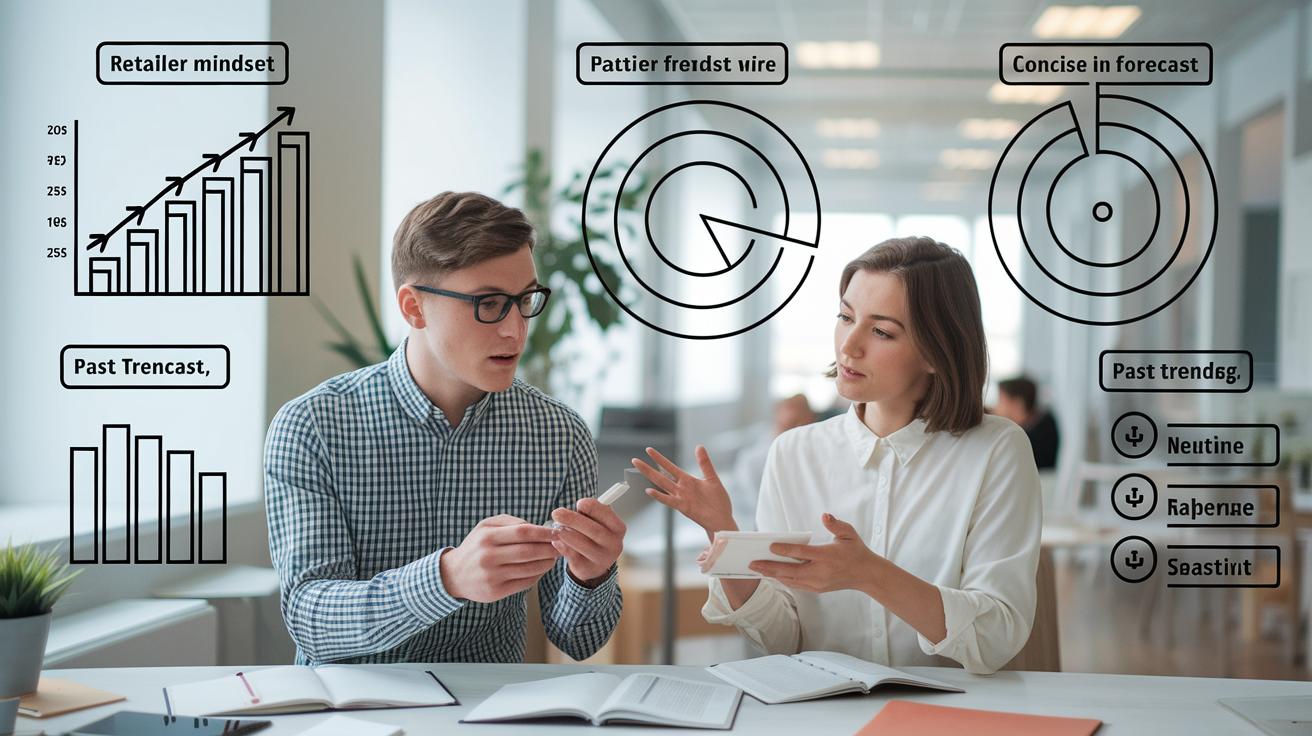
Descriptive analytics reviews past performance by summarizing data such as monthly sales or website visits. It tells us what happened by outlining clear historical trends. In contrast, predictive analytics looks at these past patterns and uses them to estimate future outcomes. For example, a retailer might study previous purchase data to forecast which items will be popular next season. This is like a store stocking extra inventory because past trends show a surge in demand.
Prescriptive analytics goes even further. It not only predicts future events but also suggests ways to respond, such as reallocating resources or changing strategies. For instance, if a predictive model indicates a drop in customer engagement, a prescriptive system might advise adjusting marketing tactics or enhancing customer service.
Together, these three methods give a complete picture of business analytics. Descriptive analytics explains past events, predictive analytics estimates what’s next, and prescriptive analytics offers guidance on how to act. This combined approach helps leaders learn from previous results, plan for future changes, and make decisions that improve outcomes.
Final Words
In the action, the post explored how predictive analytics uses historical data to forecast future outcomes. It broke down core definitions, key techniques using statistical models and machine learning, and real-life examples across sectors such as retail, banking, and healthcare. The discussion also covered the tools that streamline deployment and shared best practices while noting common challenges and ethical concerns. Understanding what is predictive analytics can guide smarter strategies and proactive decision-making in today’s competitive market. The outlook remains positive as platforms continue refining their forecasts.
FAQ
What is predictive analytics in machine learning, AI, and simple words?
The predictive analytics explanation uses historical data along with machine learning and AI to forecast future trends. It simplifies complex data into forecasts that inform decisions across various fields.
What is prescriptive analytics?
The prescriptive analytics explanation provides recommendations based on predictive insights. It not only forecasts future outcomes but also suggests actionable steps to optimize results.
What are some predictive analytics examples?
The predictive analytics examples include forecasting customer churn, assessing credit risk, optimizing pricing in retail, and identifying patient risks in healthcare, among other real-world applications.
What is predictive analytics in marketing, healthcare, and business analytics?
The predictive analytics application in marketing targets likely buyers, in healthcare flags patient risks and fraud, and in business informs strategic decisions by modeling future trends.
What tools are used for predictive analytics?
The predictive analytics tools selection includes commercial platforms like SAS Advanced Analytics and IBM SPSS, as well as open-source libraries such as Python’s scikit-learn and various R packages.
Is ChatGPT a predictive model?
The ChatGPT explanation reveals it operates on a generative pretrained transformer design that uses predictive text modeling to generate responses by estimating the next probable word.
What are the 4 types of analytics?
The four types of analytics are descriptive, diagnostic, predictive, and prescriptive; each offers different insights, ranging from summarizing past events to recommending future actions.
Is predictive analytics difficult to learn?
The predictive analytics learning process may seem challenging due to the technical skills required, but structured courses and hands-on practice can make mastering it more approachable.