


What if our daily commute helped cut emissions and build healthier cities? New policy frameworks can reshape urban transit by laying out clear rules, providing targeted funding, and supporting smart planning and technology. Urban areas could soon transform into centers of clean, efficient transport. In this post, we explain how these policy efforts drive sustainable mobility and offer practical steps to improve transit for everyone.
Core Components of Policy Frameworks Promoting Sustainable Urban Mobility Initiatives
Policy frameworks for sustainable urban mobility depend on a few key foundations that drive change in our cities. The EIT Urban Mobility Manifesto sets out Europe’s path to zero pollution by 2050. It is built on the feedback of over 1,200 stakeholders and more than 270 partners across five Innovation Hubs. With support for over 140 mobility startups, these initiatives aim to bring modern transit solutions to market quickly while ensuring the right mix of rules and investments for cleaner, more efficient transport.
- Regulatory instruments: Set clear standards to reduce emissions and noise, protecting both public health and the environment.
- Funding and incentives: Use grants, subsidies, and public–private partnerships to cut financial barriers for green transit projects.
- Land-use integration: Mix smart zoning with transit planning to reduce car use through mixed-use development.
- Stakeholder engagement: Bring together government agencies, academic institutions, and private companies to share insights and align on goals.
- Tech support: Use data-based platforms and smart infrastructure tools to help with real-time monitoring and effective policy rollout.
Each of these elements is crucial for building a plan that speeds up urban mobility reform. By mixing rules with financial help, smart land planning, combined efforts, and technological tools, this strategy makes it easier to reach a sustainable, zero-pollution future. Together, these components improve policy coherence, quicken innovation, and build stronger urban transit systems ready to meet both environmental and economic challenges.
Regulatory Mechanisms in Policy Frameworks for Sustainable Urban Mobility Initiatives

Regulatory tools are key to creating cleaner air and quieter streets. Tools like the NDC Transport Tracker and Climate Action Toolkits set and check limits for emissions and noise. These guidelines, built on the "10 Principles for Sustainable Urban Transport," use clear rules such as congestion charges, noise limits, and zoning laws to reduce environmental impacts. They help cut pollution in cities, especially where over 70% of Europeans live, by basing transit improvements on measurable standards.
Laws like congestion charges and zoning regulations guide us toward cleaner commuting options. They encourage less vehicle use and support investments in low-emission transit solutions. Embedding these rules into policy helps protect public health and improve environmental quality. Together, these measures drive a shift toward sustainable urban mobility and healthier communities.
Financing and Incentive Schemes in Policy Frameworks Promoting Sustainable Urban Mobility Initiatives
Policy frameworks use many financial tools to boost green transit. One major effort is a €X-million fund that supports over 140 startups with grants, coaching, and accelerator programs. These funds help companies test new ideas and grow their services. Grants ease early costs while coaching and accelerators help refine business models. This mix of support builds stronger companies and attracts more investor interest in eco-friendly transport.
Public transport incentives also matter a lot. Subsidies for low-emission vehicles and lower peak-hour fares cut travel costs and encourage commuters to choose greener options. Partnerships with five Innovation Hubs simplify public-private financing and resource sharing for large projects. Together, these initiatives create a strong financial base that reduces risks and speeds up the move to sustainable urban mobility.
Integrated Land-Use and Transit Development in Policy Frameworks Promoting Sustainable Urban Mobility Initiatives
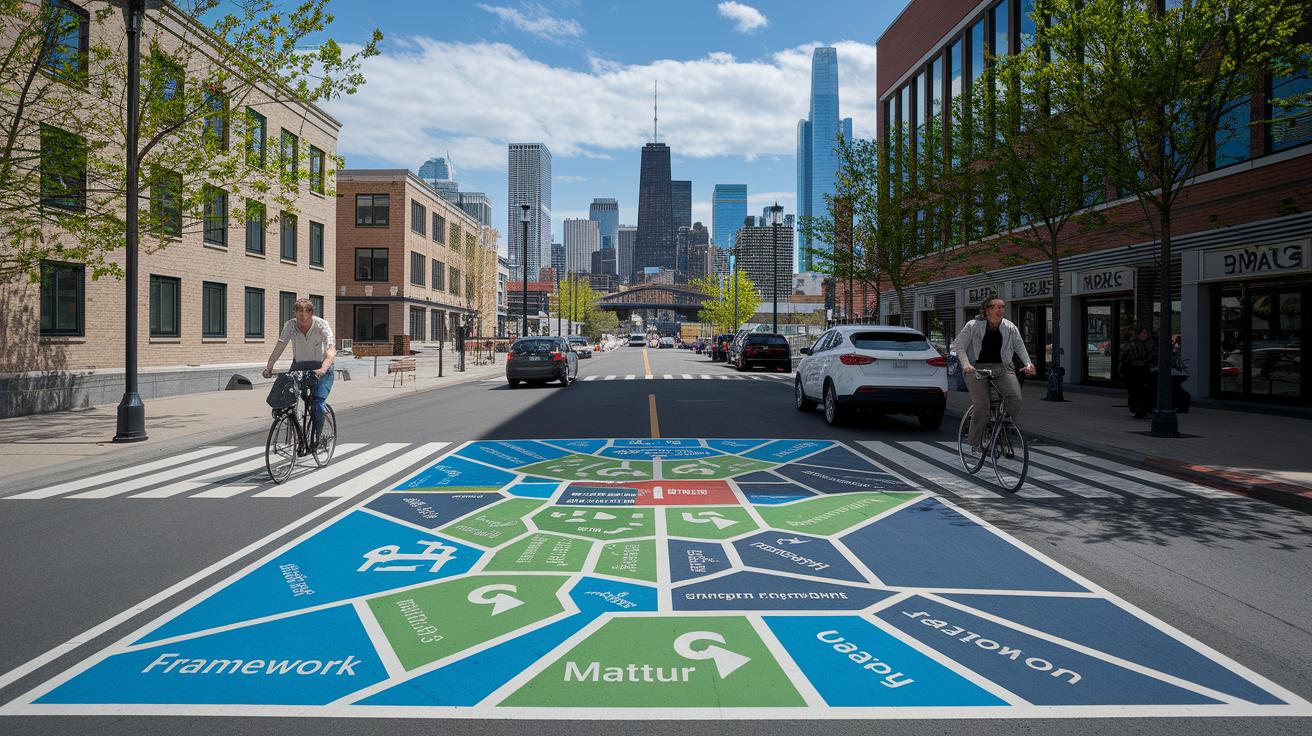
Integrated land-use planning is key for reducing car reliance and building lively, accessible neighborhoods. New policies use the "10 Principles for Sustainable Urban Transport" to connect zoning laws with transit routes. They encourage mixed-use developments, cycling trails, and streets designed for pedestrians. Working with groups like the International Climate Initiative ensures that urban designs support cleaner, healthier travel options.
Changing zoning rules to back transit-focused projects reshapes our cities. Municipalities now integrate homes, businesses, and recreational spots around transit hubs to lessen the need for private vehicles. This shift simplifies commutes, supports local shops, and enhances public spaces. It aligns private investment with public planning so everyone enjoys better transit access and safer neighborhoods.
Transit-Oriented Development Blueprints
Regulations now support mixed-use zoning that lets diverse activities flourish next to transit lines. City planners design walkable corridors that safely link residents with transit stops for smooth last-mile connectivity. Integrated mobility hubs bring together several transport modes to encourage a move away from cars. Greenway networks also tie recreational and green spaces to transit infrastructure. Local authorities enforce these guidelines through planning rules and financial incentives to ensure that new projects boost sustainable urban mobility.
Technology and Innovation in Policy Frameworks Promoting Sustainable Urban Mobility Initiatives
Policymakers are focusing on using new technology to improve city transport. They back startups with coaching and accelerator programs that help turn creative ideas into real products. Mobility-as-a-service platforms and smart signaling systems are becoming popular. Tools like the Transport Data Commons and Rethinking Transport Labs provide real-time data so decision makers can make better choices. For example, think of a simple app that adjusts bus schedules on the fly based on how busy the routes are. This mix of smart technology and flexible policies makes city transit more responsive and efficient.
At the same time, new policies are funding electric-vehicle charging networks and installing IoT sensors to collect traffic data. These sensors help traffic management systems find the best routes, which cuts down on congestion. When sensors detect heavy traffic, city systems can automatically change signal timings to ease the flow. This approach not only makes commuting easier but also supports public health and environmental goals.
Case Studies of Policy Frameworks for Eco-City Transit Legal Steps

Three cities have taken clear legal steps that improved urban transit. They experimented with congestion pricing (fees for entering busy areas), emission charges (fees for pollutants), and integrated ticketing systems (one ticket for all modes of transit). A European Parliament roundtable on December 3 stressed the need for cross-border policy alignment and strong stakeholder collaboration. The C40 Cities network confirmed these strategies work in 97 megacities, offering a model for both the public and private sectors.
| City | Policy Mechanism | Outcomes |
|---|---|---|
| Stockholm | Congestion-pricing pilot | 20% traffic drop |
| Helsinki | Emission-charge trials | 15% reduction in particulates |
| Munich | Integrated ticketing system | Improved transit connectivity |
These studies show that targeted legal actions can shift urban travel habits. The examples from Stockholm, Helsinki, and Munich prove that a well-planned intervention can lower traffic, improve air quality, and create a more seamless transit system. Policymakers can adopt these proven models to meet public health goals while ensuring smooth urban mobility. The experiences of these cities provide a reliable blueprint that links smart policy tools with active stakeholder engagement to transform urban transit.
Measuring Impact and Continuous Evaluation in Policy Frameworks Promoting Sustainable Urban Mobility Initiatives
Policymakers now use evaluation frameworks that work continuously instead of relying only on basic emissions checks. These frameworks focus on real-world, data-driven policy tweaks and include detailed case studies. One study found that after examining quarterly travel data, a transit authority changed its fare system to boost public transport use by 12%. This shows that small, timely adjustments can lead to clear benefits.
New methods mix real-time data with predictive tools to guide city transport policies. By studying ridership trends and economic effects, cities can quickly update actions to improve environmental results and match changing travel habits. For example, one city improved its congestion pricing after data showed shifts in traffic, which led to a drop in carbon emissions.
Best Practices in Policy Frameworks Promoting Sustainable Urban Mobility Initiatives

Policy frameworks work best when they use clear, data-backed case studies and smart tweaks. The focus should be on measurable results instead of just giving counts of stakeholders or talking about big ideas. For instance, a transit authority in City X boosted its on-time performance by 15% after refining its real-time route management. They reviewed performance data every month and identified specific corridors where changes would improve service.
Policy makers can use a targeted, evidence-based approach by:
- Analyzing transit usage data to spot opportunities.
- Running pilot programs that adjust rules based on real-time feedback.
- Holding regular meetings with key stakeholder groups for focused input.
These steps provide clear, practical insights that can help build stronger urban mobility systems.
Final Words
In the action, this article explored how policy frameworks promoting sustainable urban mobility initiatives are built through clear regulatory pathways, financial incentives, integrated land-use planning, technology support, and city-level case studies. We broke down the key components that drive cleaner, more efficient urban travel.
The insights offered help translate complex policy elements into strategic moves. Embrace these practical takeaways to guide competitive decisions and adapt swiftly in evolving markets.