


Workplace safety matters. Everyday hazards like slippery floors, loose carpets, and stray wiring can easily cause injuries if not fixed. In busy settings, these risks are often overlooked. This article provides clear tips on spotting and managing potential dangers. With practical examples and easy ideas, you can help make your work environment safer for everyone.
Physical Hazards Examples: Smart Safety Tips
Physical hazards come from environmental factors that transfer energy into our bodies and cause injuries. They can lead to anything from minor cuts to severe, life-changing harm. Because these dangers appear in many forms, it is vital to understand and assess them to keep workplaces safe.
The Occupational Safety and Health Administration (OSHA) groups these risks into five categories: explosives, oxidizers, flammable materials, corrosives, and gases under pressure. This classification makes it easier to spot hazards and control risks in different work settings.
- Slip hazards: Wet floors can cause unexpected falls.
- Trip hazards: Loose carpeting or cluttered walkways increase the chance of tripping.
- Mechanical injuries: Pinch points on machinery may cause deep cuts.
- Thermal risks: Very hot or cold surfaces can burn or freeze skin.
- Electrical hazards: Exposed wiring or arc flashes could result in shocks.
- Radiation exposure: Ionizing rays in industrial areas can damage cells.
- Sound hazards: Loud environments can harm hearing.
- Chemical exposures: Corrosive spills may injure skin and damage materials.
Understanding these hazard types is key to a strong safety plan. When safety teams recognize risks like slippery surfaces or extreme temperatures, they can put targeted controls in place. This proactive approach helps protect workers and builds a safer work environment.
Common Workplace Injury Scenarios from Physical Hazards
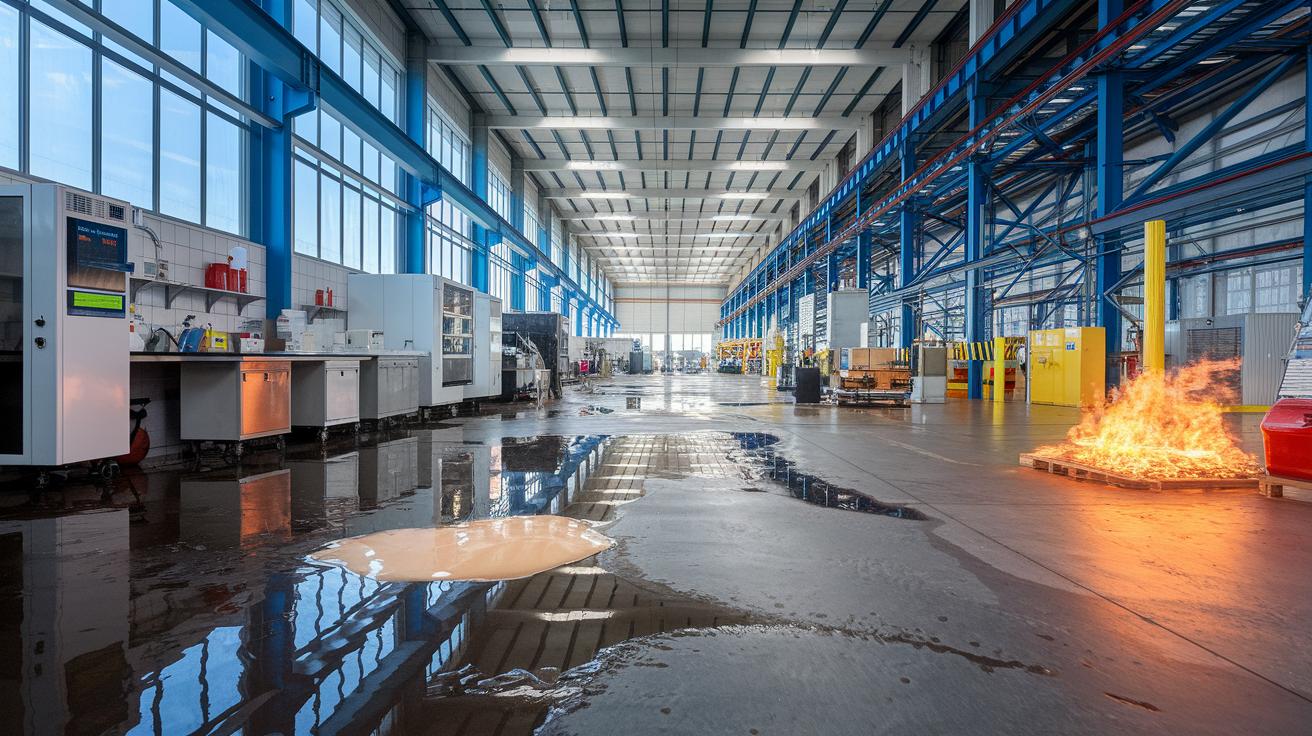
Workplaces can be busy, small, or very organized, but every setting has its own risks. In a warehouse, a wet floor or a small puddle can quickly lead to an accident. In an industrial kitchen, spills or clutter can cause someone to trip. Laboratories face dangers from chemical splashes and airborne particles. Manufacturing floors sometimes have exposed wiring that can lead to electrical shocks. Outdoor worksites must cope with extreme heat or cold, which can cause heat stress or cold injuries.
| Scenario | Setting | Potential Injury |
|---|---|---|
| Slip on wet floor | Warehouse | Sprains; broken bones |
| Trip over cluttered aisles (unsafe working conditions) | Office/Industrial | Ankle injuries; fractures |
| Chemical splash | Kitchen Laboratory | Chemical burns; respiratory issues |
| Electrical shock | Manufacturing Floor | Burns; potential cardiac issues |
| Heat stress | Outdoor Construction Site | Dehydration; heat stroke |
These scenarios show why companies need clear safety controls. Regular risk checks and preventive steps are key to avoiding accidents and reducing exposure to unsafe conditions.
Environmental and Radiation Physical Hazard Instances
Natural Environmental Hazards
Environmental factors can pose real threats even when they aren't immediately visible. Intense sunlight can quickly burn your skin and, over time, lead to lasting damage. Extreme weather adds to this risk. Heat waves might cause heatstroke, while very cold conditions can trigger frostbite if you’re not adequately prepared. High altitudes lower oxygen levels, sometimes resulting in altitude sickness for those not used to it. Workers should protect themselves by wearing proper clothing, using sunscreen, and gradually getting used to harsh climates. Even a simple outdoor area can become dangerous when strong sun and severe weather combine.
Radiation and Pressurized Materials
High levels of ionizing radiation can cause immediate harm to bodily tissues, and even low doses over time may increase the risk of cancer. Pressurized gases and materials also require careful handling. For instance, if a gas cylinder overheats or is mismanaged, it could burst and cause serious injuries. Strict monitoring systems and well-practiced emergency protocols are essential to prevent accidents from these invisible and sudden hazards.
Ergonomic Strain and Mechanical Injury Cases

Repetitive tasks and bad posture at work can lead to painful muscle and joint problems. Long hours at the keyboard can cause tendonitis (tender tendons), and sitting too long without proper back support can create lower back pain. Many office workers develop carpal tunnel syndrome after working for extended periods.
Lifting heavy objects without proper help or form also increases injury risk. Incorrect manual handling puts too much strain on muscles and joints, often leading to sprains or herniated discs. Such injuries slow down work and may need long recovery times, affecting both productivity and personal health.
In factory settings, machinery hazards are a major concern. Moving parts, spinning shafts, and missing safety guards can cause severe injuries. For example, a worker caught in a conveyor belt might suffer an amputation or deep cuts. Using proper safety measures is essential to prevent these dangerous incidents.
Accident Prevention and Control Measures for Physical Hazards
Businesses must focus on stopping accidents by taking away or replacing risks when they can. They rely on both engineering changes and work policies to lower workers’ exposure to hazards. Regular equipment checks and maintenance also help prevent failures, and monitoring systems keep lone workers safer.
Engineering Controls
Changing the physical setup can cut down on risks. Consider these five examples of engineering controls:
- Machine guards that block access to moving parts.
- Local exhaust systems that remove harmful particles from the air.
- Automation of risky tasks to limit manual exposure.
- Acoustic dampening that lowers noise levels.
- Thermal barriers that shield workers from extreme heat or cold.
Administrative Controls and Personal Protective Equipment
Using clear work rules and training guides safe behavior. These methods work best when paired with personal protective equipment as a backup. Key actions include:
- Providing regular safety training to update skills and improve hazard awareness.
- Setting clear standard operating procedures that outline safe practices.
- Posting signs that warn of potential dangers.
- Rotating jobs to lessen repetitive strain and constant exposure to specific risks.
- Conducting regular checks to spot and fix unsafe conditions.
- Choosing suitable protective gear, such as gloves, goggles, or heat-resistant clothing.
This blend of engineering and administrative methods helps keep hazards under control and makes the workplace safer for everyone.
Physical Hazard Incident Case Studies and Lessons Learned

At a remote work site, a lone worker fell because there was no check-in system. The rescue was delayed, which showed how dangerous isolation can be. In response, the company set up monitoring protocols to provide quick help when needed.
A chemical processing plant faced another issue when a worker suffered a burn from hazardous substances. The accident happened because proper protective gear was missing. Management then enforced stricter personal protective equipment rules to lower the risk of chemical exposure.
In a manufacturing facility, a worker got caught in machinery after removing a safety guard without permission. This event led to an engineering update and disciplinary actions. It serves as a reminder that altering essential safety features without approval can cause serious harm.
Management reviews highlight three key risks:
• Poor monitoring of lone workers
• Inconsistent use of protective gear
• Unauthorized changes to safety equipment
Regular updates to cleaning procedures and routine safety checks are crucial in preventing future incidents. For more information on legal and compliance steps after an incident, see work injury laws (https://sharingeconom.com?p=1907).
Final Words
In the action, we defined physical hazards examples and explained how they impact workplaces. The post broke down risks like slips, mechanical injuries, and thermal exposures, while showing OSHA’s five-class system in practice. We shared real-world injury scenarios and detailed measures, from engineering tweaks to effective PPE, that reduce harm. Case studies offered practical lessons and underscored the need for regular assessments. Positive steps like these help create safer environments and empower strategic decision-making in rapidly changing work settings.
FAQ
Q: What are physical hazards and can you provide examples?
A: The term physical hazards refers to environmental factors that transfer energy and cause harm. Examples include slips, mechanical injuries, thermal risks, and electrical shocks, which may appear in various settings.
Q: What are some physical hazard examples in food and kitchen environments?
A: The term physical hazards in food and kitchen settings involves risks such as slip accidents from wet floors, cuts from sharp tools, and burns from hot surfaces or equipment.
Q: What are common examples of physical hazards in the workplace?
A: The term physical hazards in the workplace covers risks like slips on wet surfaces, injuries from moving machinery, thermal exposures from extreme temperatures, and electrical shocks from faulty wiring.
Q: What are the four types of physical hazards?
A: The term four types of physical hazards generally includes mechanical hazards, thermal hazards, electrical hazards, and radiation hazards, though additional categories like ergonomic risks may also be considered.
Q: How can physical hazards be avoided?
A: The term avoiding physical hazards involves regular risk assessments, proper training, maintaining clear work areas, and using appropriate control measures such as personal protective equipment and engineering controls.
Q: What is a real-life example of a physical hazard?
A: The term real-life example of a physical hazard can be seen when a wet floor in a hospital leads to a slip and fall injury, highlighting everyday risks that require consistent preventive measures.
Q: What are the ten types of hazards often mentioned?
A: The term ten types of hazards typically refers to categories such as physical, chemical, biological, ergonomic, psychosocial, mechanical, thermal, electrical, radiation, and explosion hazards, each posing unique risks in different environments.