


Can seasonal farm labor shape America’s food supply? Nearly 353,000 H-2A workers are essential to the nation’s harvest in 2024. Their skill and local expertise drive success in major farming areas such as California, Florida, and Georgia. Over time, these workers, once overlooked, now benefit from a more straightforward visa process and deep-rooted community support. Recent policy adjustments and personal stories point to a promising future for American agriculture.
h2a workers: Bright Future in Agriculture
H-2A workers fill seasonal farm jobs across the United States. In 2024, 352,682 workers were recorded, with each assignment lasting about six months. The program began in the early 1900s when farmworkers were largely excluded from federal labor protections. Yet, it has expanded quickly, with a record 256,677 certifications issued in fiscal year 2019, even as oversight gaps remain.
H-2A workers play an essential role in states such as Florida, Georgia, California, and Washington. These regions need labor for intensive tasks like harvesting fruits, vegetables, and managing field operations. The program’s growth mirrors a rising demand for foreign labor during busy seasons and shortages in the local workforce.
Foreign workers applying for an H-2A visa must meet strict criteria. They need to provide proof of past agricultural experience and a clear criminal record. The process involves filling out the DS-160 form, submitting supporting documents, and attending a consular interview. Typically, processing takes about 60 days, though it may be longer during peak seasons.
Both employers and workers appreciate the clear steps in the application process, even as they remain aware of the program’s historic challenges. Many applicants share personal stories about their farming background. One common narrative is, "I grew up in a farming community and have hands-on experience in harvesting and equipment operation." This blend of tradition and modern policy is a key element of the H-2A program.
| Statistic | Value |
|---|---|
| 2024 H-2A Workers | 352,682 |
| Average Assignment Length | ~6 months |
| FY 2019 Certifications | 256,677 |
| Top States | Florida, Georgia, California, Washington |
Visa Eligibility Criteria and Application Procedures for H-2A Workers

To qualify for an H-2A visa, applicants must show they have hands-on experience in agriculture and a clean criminal record. They need to fill out the DS-160 form and include supporting paperwork like past employment records, employer letters, or valid certifications. The visa process also includes a consular interview and usually takes about 60 days.
Looking ahead, a new digital application system is set to launch in 2025 to simplify the process further. After the interview, applicants must manage tax obligations, which include filing Form 1040NR to meet U.S. income tax rules.
Surprisingly, many successful H-2A workers began their journey on modest family farms, a background that helped them navigate a strict visa process.
Key process points:
- Prove agricultural work experience and maintain a clear criminal record.
- Complete the DS-160 form with all necessary supporting documents.
- Attend a consular interview with an average processing time of about 60 days.
- Benefit from a planned digital application update in 2025.
- Meet post-interview tax obligations by filing Form 1040NR.
Employer Sponsorship Guidelines and Recruitment Processes for H-2A Workers
Farm owners and HR teams must take clear legal steps when sponsoring H-2A workers. They need to advertise locally to prove that no qualified U.S. applicants are available for the job. This rule confirms the genuine need for seasonal foreign labor. For example, one Midwest farm placed job ads in local newspapers and community boards and explained that no local talent was available.
Recruitment agencies play an important role in this process. They post visa job listings, screen candidates, and help draft contracts. Their expertise speeds up candidate screening and ensures all paperwork meets federal guidelines. Many employers say that using an agency cuts processing times and reduces administrative errors. One HR manager said, "Our recruitment agency handled all candidate interviews and paperwork, which made the process simpler."
The cost of visa sponsorship is another critical factor. On average, sponsoring a worker costs about $1,500. This fee covers visa charges, travel expenses, and recruitment services. Careful cost management is essential to keep the budget accurate.
Recordkeeping is vital for compliance. Employers must maintain housing logs, wage statements, and valid I-9 verification documents. These records support audits, prove compliance during inspections, and build trust with workers and regulators.
Key points include:
- Local advertising to prove the absence of qualified U.S. applicants.
- Using recruitment agencies to manage job listings, candidate screening, and contract drafting.
- An average sponsorship fee of approximately $1,500 per worker.
- Maintaining accurate records such as housing logs, wage statements, and I-9 forms.
Farm owners and HR professionals need to plan these steps carefully to comply with federal rules while enhancing operational efficiency.
Agricultural Labor Wage Standards and Housing Requirements for H-2A Workers

New wage regulations now set two pay levels for H-2A workers. Level 1 workers, who rank at the 17th percentile of skill, earn $13.70 an hour before housing deductions and $11.78 after. Level 2 workers at the 50th percentile earn $17.22 before deductions and $15.30 after. Updated state wage maps and downloadable PDF guides help employers match local pay rules, ensuring consistency across different agricultural areas.
| Skill Level | Hourly Wage Before Housing Deduction | Hourly Wage After Housing Deduction |
|---|---|---|
| Level 1 (17th percentile) | $13.70 | $11.78 |
| Level 2 (50th percentile) | $17.22 | $15.30 |
The changes are expected to reduce earnings for H-2A workers. Analysts estimate the new rules could cut guestworker incomes by about $2 billion annually, with broader wage declines reaching between $4.4 billion and $5.4 billion across the sector.
On-farm housing is another key area of focus. Housing for H-2A workers must meet strict standards set by the Department of Labor (DOL) and pass detailed inspections. Farms must provide safe, sanitary living conditions, and failing to do so can trigger enforcement actions. Employers can apply for Section 514 housing grants to help pay for housing upgrades and ongoing maintenance.
Key points include:
- New AEWR rules set mandatory wage standards.
- Employers can use updated state wage maps and guides to ensure compliance.
- On-farm housing must meet DOL safety and sanitation standards.
- Section 514 grants are available to support housing improvements.
Rights, Protections, and Safety Standards for H-2A Workers
Interviews with 100 Mexican H-2A workers reveal major problems. Workers have faced discrimination, sexual harassment, wage theft, and other safety issues. They describe a lack of clear grievance procedures and weak federal oversight. As a result, many claims of abuse go unaddressed, leaving workers exposed.
The lack of strong oversight means many H-2A workers often work in unsafe conditions. Employers are required to meet OSHA and Department of Labor (DOL) standards (for example, providing proper personal protective equipment and complete safety training). However, reports show that these basic measures are sometimes missing, placing workers in harm’s way.
Key rights and protections for H-2A workers include:
- Safe working conditions with adequate personal protective equipment.
- Mandatory health and safety training provided by employers.
- A reliable system for reporting abuse that protects workers from retaliation.
Current analysis suggests that legislative reforms and tougher regulations need to address these issues. Recommended changes include creating an independent system to handle complaints and imposing strict penalties for failing to meet federal safety standards. Employers have a clear legal duty to keep workers safe and treat them fairly, yet many fall short.
Workers and advocacy groups stress that enforcing OSHA and DOL rules is essential to stop exploitation and restore trust. If these reforms are adopted, working conditions could improve significantly, making the agricultural sector safer and more fair for H-2A workers, who play a critical role in our nation’s food production.
State-Specific H-2A Workers Programs: California and Texas Focus

California and Texas lead in H-2A applications. In California, about 50,000 seasonal workers secure jobs each year, while Texas sees around 35,000 such workers annually. Both states depend on foreign labor for fruit and vegetable harvesting, general farm tasks, and livestock care. California’s farms usually pay about $18.00 per hour, whereas Texas workers earn roughly $14.50 per hour under state wage guidelines (AEWR schedules).
Petition strategies vary by state. In Texas, Louisiana, and North Dakota, many smaller petitions are filed, with each requesting only a few workers. This contrasts with larger, multi-state petitions often used in other regions. In California, applications tend to cover broader projects, resulting in higher wages and more workers per petition.
Key points include:
- California averages about 50,000 H-2A workers each year.
- Texas averages around 35,000 H-2A workers annually.
- Tasks include fruit and vegetable harvesting and livestock care.
- Wage schedules set about $18.00 per hour in California and $14.50 per hour in Texas.
- Texas, Louisiana, and North Dakota often use many smaller petitions compared to larger applications elsewhere.
These differences highlight the impact of local market needs. Employers adjust their recruitment and application strategies based on regional demand. Local practices also influence wage outcomes and the efficiency of farm operations. Understanding these state-specific trends is key to grasping modern agricultural labor trends in the United States.
Recent Rule Changes and Future Outlook for H-2A Workers Program
New proposals focus on giving workers stronger rights and tighter oversight. Policy makers plan to include farm workers in decision-making by seeking their feedback directly. As one policy analyst explained, "Reforms that include worker voices change the game – like adjusting a recipe until every ingredient contributes to a balanced flavor."
Stakeholders say these changes aim to make wage-setting clearer and offer workers a way to report safety concerns and resolve issues. One labor rights advocate put it this way: "Imagine rules that not only simplify the process, but also let workers monitor wage fairness."
FAQs and Resources for H-2A Workers and Employers
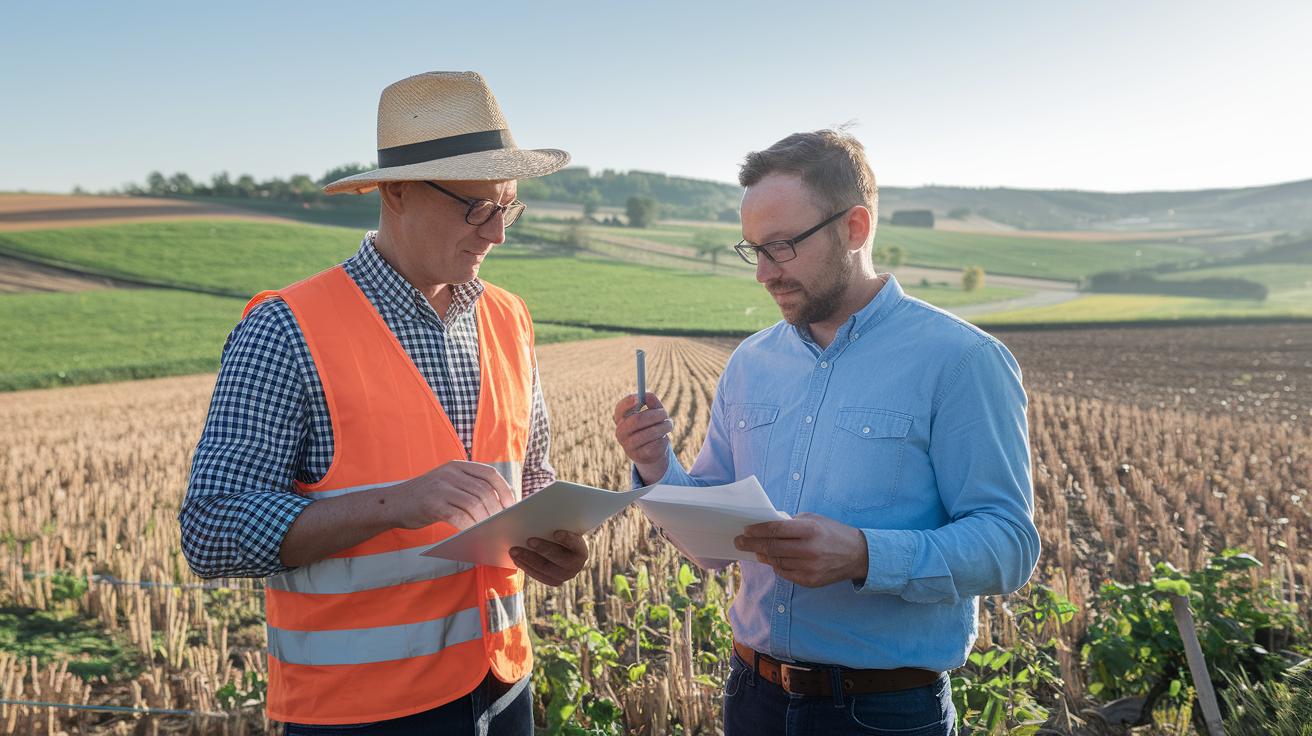
Farm managers and seasonal workers often have clear questions about the H-2A program. They want to know about contract length, visa renewal steps, tax withholdings, and overtime rules. One worker said, "My contract clearly stated a six-month term, but I was still puzzled about renewal steps." The USCIS Data Hub remains an essential tool for tracking visa issuance and application status, keeping both workers and employers informed.
Frequently asked questions cover:
- Details on contract length and renewal procedures.
- Guidelines for tax withholdings and filing tasks (including completing Form 1040NR).
- Eligibility for overtime pay in agriculture plus information on employer-provided housing and transport.
Employers find support in the structured resources available. For example, the DOL H-2A handbook lays out key labor standards and safety measures. Local legal aid clinics also help workers with application challenges and dispute resolution. One worker remarked, "Knowing where to find help made a huge difference during my visa processing."
Workers seeking application help or information on housing near California often rely on these official sources. These resources aim to clear up the process, ease doubts, and promote transparency in the H-2A program.
Final Words
In the action, the blog post outlined key elements of the H-2A visa process. It covered visa eligibility, employer sponsorship guidelines, wage standards, worker protections, and state-specific program details.
The discussion also examined digital updates and future forecasts. The insights aim to empower h2a workers, regulators, and decision-makers with practical context and data for informed choices.
Positive trends in policy changes and worker rights inspire a brighter future for all in the sector.
FAQ
Q: What are H-2A workers?
A: The term H-2A workers refers to temporary foreign laborers hired to fill seasonal agricultural jobs in the United States, often working on farms and similar operations.
Q: What are H-2A temporary agricultural workers programs?
A: The H-2A program allows U.S. employers to legally hire foreign workers for seasonal agricultural labor, ensuring that farms can meet hiring needs when local applicants are not available.
Q: How do workers apply for an H-2A visa and meet eligibility requirements?
A: The application requires completing a DS-160 form, attending a consular interview, and submitting proof of agricultural experience along with a clean criminal record; processing usually takes about 60 days.
Q: What wage standards apply to H-2A workers across states?
A: H-2A workers receive wages based on federal guidelines, with rates set at different skill levels; for instance, Level 1 starts around $13.70 per hour before deductions, while Level 2 generally pays higher, varying by state.
Q: Do H-2A workers pay for housing?
A: H-2A workers generally receive employer-provided housing that complies with Department of Labor standards, ensuring that living conditions meet required inspection checklists.
Q: What rights do H-2A workers have?
A: H-2A workers hold rights to safe working conditions, protection from wage theft, and access to grievance channels under Department of Labor and OSHA regulations.