
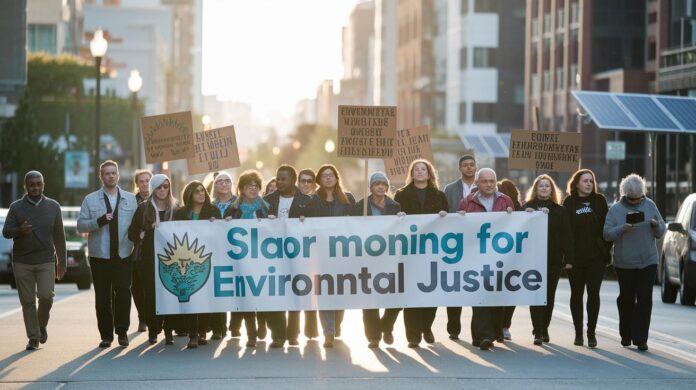

Many neighborhoods suffer from higher pollution levels because past decisions left some areas at a disadvantage. Environmental justice means everyone should share in the responsibility to care for our environment, deciding together where parks and clean-air zones should be located. This post reviews the history and current practices that have created these imbalances and explains how communities are taking action to improve their surroundings. Change-makers today show that when every voice is counted, a safer future is within reach.
Environmental justice issues: Empowering Change Today
The EPA explains environmental justice as treating all people fairly and involving them in decisions that affect their lives. It means that environmental benefits, risks, and burdens are shared equally. Policies and practices should include every community in decision-making, aiming to balance social, economic, and environmental factors. For instance, community groups have pushed for better air quality by speaking up. Imagine a neighborhood where every resident can help decide where parks and other facilities are built.
These challenges stem from a long history of placing harmful facilities, like landfills, incinerators, hazardous waste sites, auto body shops, and industrial plants, in low-income neighborhoods of color. For decades, these biased placements have led to uneven resource distribution, leaving vulnerable communities with less protection. As a result, areas that produce the least pollution often suffer the worst impacts from industrial toxins and pollutants.
These practices hurt both community health and the overall environment. Poor air quality near industrial sites is linked to higher rates of respiratory diseases. Regular exposure to toxic chemicals and lead, especially among children, has led to lasting public health issues. Moreover, these communities face higher risks from flooding and extreme weather. This situation underscores the need for environmental justice that protects everyone’s right to a safe and healthy living space.
The Historical Roots of Environmental Justice Issues

Early conservation efforts laid the foundation for protecting our natural resources. Communities and environmental advocates worked hard to keep nature intact, setting a clear precedent for linking environmental protection with social fairness.
In the late 1970s, a case in Warren County, North Carolina changed the landscape. Plans to dump 6,000 truckloads of toxic PCB soil in a mostly Black, low-income area led to six weeks of peaceful protests and over 500 arrests. The protests made it clear that harmful waste was often dumped in marginalized neighborhoods.
In 1990, environmental justice leaders sent out a public letter accusing mainstream groups of racial bias. This direct action renewed the focus on fairness. By 1991, the First National People of Color Environmental Leadership Summit established ten core principles that honored the earth and affirmed every community’s right to a healthy environment.
For more than 40 years, grassroots environmental justice organizations have grown and evolved. They have expanded their mission from preserving natural resources to championing climate justice. Their work now covers the full range of environmental risks and inequities, ensuring that fairness is at the heart of every effort.
Environmental Racism Case Studies in Environmental Justice Issues
Real-life cases show how system inequalities damage marginalized communities through environmental harm. These studies reveal that poor decision-making has repeatedly forced low-income and Indigenous communities to face greater risks. They point out how cost-saving policies can overlook community well-being and stress the need for fair environmental management.
In many instances, local groups have organized to stop plans for toxic waste dumping, fight water contamination, and protest pipeline projects. These actions serve as both reminders of past struggles and guides for future efforts to counter environmental injustice.
| Case Study | Location | Year | Impact |
|---|---|---|---|
| Warren County PCB Protest | Warren County, NC | 1978 | Blocked toxic waste site |
| Flint Water Crisis | Flint, MI | 2014 | Lead-contaminated water |
| Yu’pik Village Thaw | Alaska | 2021 | Infrastructure loss |
| Dakota Access Pipeline | Standing Rock, ND | 2016 | Indigenous rights impact |
These examples show that community action is vital in challenging environmental policies that fail to protect vulnerable groups. In Warren County, nonviolent protest delayed plans for toxic dumping, while the Flint crisis exposed governance failures that left residents at risk of harmful contaminants. The issues in Yu’pik village and at Standing Rock remind us that environmental problems affect more than just air and water, they also impact community infrastructure and cultural heritage.
Widespread protests and organized advocacy continue to highlight policy gaps. They spur calls for fair resource distribution and more responsive measures. These case studies underscore the importance of combining grassroots activism with policy reform and active community engagement to ensure every community enjoys a safe and healthy environment.
Policy Responses to Environmental Justice Issues

Communities have pushed for fair treatment in environmental choices. Early efforts linked environmental protection to community health and worked to end unfair practices. Over time, laws began to protect every community’s right to a safe environment. Changes since the 1990s led government agencies and environmental groups to address imbalances in federal programs and local actions.
Major federal steps now show this evolving commitment. For example, Executive Order 12898 (1994) requires federal agencies to consider the health risks for minority and low-income groups. Title VI of the Civil Rights Act stops discrimination in EPA-funded programs. Biden’s Justice40 Initiative now directs 40% of federal investments in climate, clean energy, and infrastructure to disadvantaged communities. Environmental NGOs also support these moves by launching projects and diversifying leadership. Key policies include:
- Executive Order 12898 on Environmental Justice
- Title VI enforcement in environmental programs
- Biden’s Justice40 Initiative
- NGO-driven equity programs
- Corporate ESG commitments addressing environmental justice
Yet, challenges remain. Critics say that local enforcement gaps, varying community engagement, and inconsistent funding slow progress. While federal mandates offer a strong plan, turning these policies into real improvements is still in progress. Ongoing debates highlight the need for regular review and strong accountability measures to ensure protections for vulnerable populations.
Socio-Economic and Racial Disparities in Environmental Justice Issues
Many low-income communities of color have long suffered from uneven resource distribution. Polluting facilities like industrial waste sites are often positioned near their homes, increasing exposure to hazardous emissions. This exposure leads to higher rates of asthma and heart problems. Think of a neighborhood next to industrial plants, where persistent pollutants reveal unequal resource allocation and patchy safety measures.
In urban areas, residents in low-income neighborhoods also face challenges like food deserts and a lack of green spaces. These issues make the effects of polluted air and aging buildings even worse. Children are especially vulnerable, particularly from lead in old housing. Picture a city block without parks or community areas, where everyday life is shadowed by harmful urban pollutants.
Rural and Indigenous communities face additional hurdles, especially in securing safe drinking water. Many depend on water sources that are tainted by agricultural chemicals and nearby industrial activity. Imagine a remote village where tap water cannot always be trusted. This example shows that environmental injustice is not just an urban problem; it affects many communities across the nation.
Grassroots Advocacy and Reform Strategies for Environmental Justice Issues

Since the 1990s, communities have united to form local groups that demand fair treatment and clear accountability in environmental decisions. These organizations work to fix long-standing imbalances through community action, policy lobbying, and citizen-led science. They rely on peaceful protests and legal challenges to protect neighborhoods from harmful industrial practices. Their campaigns force public agencies and private companies to focus on providing safe air and water for everyone.
- Peaceful disobedience campaigns
- Lawsuits under civil rights laws
- Community-run air and water monitoring
- Partnerships across different groups
- Advocacy at local, state, and federal levels
- Leadership development and self-care programs
These methods have not only amplified local voices but also led to real change in high-risk areas. For example, community monitoring has produced concrete data that supports tougher emission controls. Legal challenges have pushed regulators to reconsider enforcement practices in underserved neighborhoods. Strong partnerships have helped communities secure essential resources and funding, such as those from the Solutions Project, which boost local leadership and resilience. Through these steady efforts, grassroots reform continues to shape policies that narrow environmental gaps and ensure every community can enjoy clean air and water.
Emerging Sustainable Justice Initiatives and Collaborative Solutions for Environmental Justice Issues
Impact investing and technology innovations are driving new ways to tackle environmental justice. Pilot projects now use blockchain to track pollution and monitor data live. This helps communities check environmental details for themselves. At the same time, green infrastructure and clean-energy programs cut harmful toxins and create local jobs to build community strength. Non-profit groups and private companies are teaming up to test these tech solutions, ensuring that environmental improvements benefit everyone. For example, a local project might use affordable sensors to check air quality, much like a smart thermostat adjusts the temperature at home.
Public agencies, businesses, and community groups are working together to build a greener economy. They are setting clear targets for fair and measurable environmental results. Economic trends point to a future where investments help both the planet and its people. These partnerships focus on being open, tracking results, and staying accountable, paving the way for solutions that fix old inequities and boost growth across different sectors.
Final Words
In the action, the report clarified how environmental justice issues affect communities. It detailed definitions, causes, and real-life case studies that reveal systemic inequities. The piece tracked roots from early protests to policy responses, alongside grassroots efforts that shape reform strategies. It outlined how legal measures and emerging initiatives work together to reduce inequitable resource allocation and health risks. The analysis shows clear steps toward fairer outcomes, leaving us with practical insights and a hopeful drive for positive change.
FAQ
Q: What are environmental justice examples?
A: Environmental justice examples include the placement of hazardous waste sites and industrial plants near low-income communities, which can lead to higher exposure to toxic chemicals and adverse health effects.
Q: What are common environmental justice issues today?
A: Common issues involve unequal exposure to pollution and toxic waste, resulting in increased health risks for marginalized communities due to biased industrial facility siting and insufficient environmental protections.
Q: What constitutes environmental injustice examples?
A: Environmental injustice examples are cases where communities, such as those in Flint or near the Dakota Access Pipeline, face harmful pollution and neglect of environmental protections, leading to severe health and safety challenges.
Q: What is the definition of environmental justice?
A: Environmental justice means ensuring all people receive fair treatment and meaningful involvement in environmental decision-making, providing equal protection and benefits regardless of race, income, or other factors.
Q: What are environmental justice issues in the United States?
A: In the United States, issues include disproportionate pollution burdens and toxic exposures in low-income and minority communities, often caused by biased industrial practices and inequitable resource allocation.
Q: What were environmental justice issues in 2022?
A: In 2022, environmental justice issues centered on climate-related challenges, unequal regulation of pollutants, and inadequate mitigation of industrial impacts that adversely affect marginalized communities.
Q: Where can I find environmental justice articles and resources, including PDFs?
A: Resources such as government publications, academic journals, and nonprofit websites offer a range of environmental justice articles and PDF documents that explain principles and provide case study analyses.
Q: What are some examples of environmental justice issues?
A: Examples include community responses to hazardous waste siting, protests like those at Warren County, and crises like the Flint water situation, where communities confront harmful industrial practices.
Q: What are the 5 main environmental issues?
A: The five main environmental issues include air pollution, water pollution, waste management, climate change impacts, and unequal access to healthy natural resources across communities.
Q: What is a current environmental justice issue?
A: A current environmental justice issue is the persistent inequitable siting of polluting facilities in marginalized neighborhoods, which continues to expose residents to higher risks of adverse health outcomes.
Q: What are the top 10 environmental issues?
A: The top 10 issues cover climate change, air and water pollution, hazardous waste, deforestation, loss of biodiversity, soil degradation, overfishing, urban pollution, unequal resource distribution, and food insecurity.
Q: How does environmental racism affect communities?
A: Environmental racism affects communities by placing minority and low-income groups near toxic sites and polluting industries, leading to higher health risks and reduced quality of life in these areas.
Q: What legal frameworks support environmental justice?
A: Frameworks include Executive Order 12898, Title VI of the Civil Rights Act, and the Justice40 Initiative, all designed to protect disadvantaged communities from harmful environmental exposures.
Q: How do environmental justice issues relate to human rights?
A: Environmental justice issues relate to human rights when polluted environments compromise a community’s access to clean air, water, and safe living conditions, which are essential for a healthy life.
Q: What resources are available for environmental justice legislation?
A: Legislative resources include government and legal documents, policy briefs, and academic research that detail laws and initiatives aimed at promoting fair environmental practices and protecting at-risk communities.