


Ever wonder if one idea could reshape an entire team? Collaborative problem solving breaks from old top-down methods by inviting every team member to share ideas. When everyone, from front-line workers to back office staff, has a say, small fixes can evolve into solutions that help the whole team. This method shifts focus from assigning blame to encouraging accountability, building trust and sparking creative breakthroughs. In practice, everyday challenges turn into opportunities for growth and stronger teamwork.
Collaborative problem solving sparks team synergy

Collaborative problem solving, or CPS, is a team approach where everyone works together to break down and fix tough problems. This method relies on clear conversation and shared responsibility, ensuring that each idea adds to the final solution rather than one person making all the calls.
Every team member plays a part in spotting issues and suggesting fixes. For example, if a team faces an operational delay, one member might point to a need for process change while another highlights a communication gap. Together, they create a plan that covers all angles.
This shared approach means the whole team feels accountable for the results. It moves away from old, top-down decision-making and builds a culture of joint ownership, which leads to more innovative and practical solutions.
Core Principles and Framework of Collaborative Problem Solving

Collaborative problem solving builds on a joint solution strategy framework that drives smart decisions and sparks innovation. This method brings together team members with different insights, making it effective for tackling tough challenges. It relies on a proactive intervention framework that turns individual ideas into group breakthroughs. The joint solution strategy sets clear guidelines so everyone can speak up and share ideas. Meanwhile, the proactive intervention framework makes sure that suggestions are reviewed in a supportive, non-judgmental setting.
Key principles guide this process, including:
- Shared Responsibility
- Open Communication
- Mutual Respect and Trust
- Focus on Underlying Concerns
- Collaborative Brainstorming
These principles not only support the joint solution strategy but also boost the proactive intervention framework. They build a culture where the team works together to address issues and adjust quickly as needed.
Using the joint strategy along with proactive intervention creates an environment where every voice matters. This approach cuts down on top-down decision-making and encourages open talks. When teams follow these frameworks, their diverse views lead to creative solutions that tackle the root of a problem. Every challenge is met with a coordinated, supportive, and effective response.
Practical Techniques and Strategies in Collaborative Problem Solving

Teams can use proven methods to ease conflicts, lower tensions, and work together effectively. By mixing conflict management, straightforward communication, and empathy, everyone can solve disagreements with clarity and respect. This approach focuses on finding answers instead of assigning blame, letting diverse views shape solutions that work for all.
Effective Communication
Clear communication is vital for working through problems as a team. Members share ideas by stating facts plainly and repeating common goals in their own words. Active listening is key. For example, one person might say, "If I understand correctly, you're suggesting we extend our timeline." This shows both clarity and respect for different views. Asking clarifying questions and offering concrete suggestions helps smooth out conflicts and keeps discussions on track.
Building Psychological Safety
Creating a safe space for everyone to share their thoughts is just as important. Leaders can help by inviting input without fear of criticism. Simple steps like setting basic ground rules and encouraging open conversation go a long way. For instance, a manager might say, "Every idea matters, let's hear them all." This kind of approach makes team members more willing to raise concerns early and offer creative solutions without hesitation.
By using these techniques, teams can reduce tension and resolve disputes quickly. The blend of clear communication and a safe, open atmosphere turns conflicts into opportunities for innovative problem solving.
Applying Collaborative Problem Solving in Educational Settings
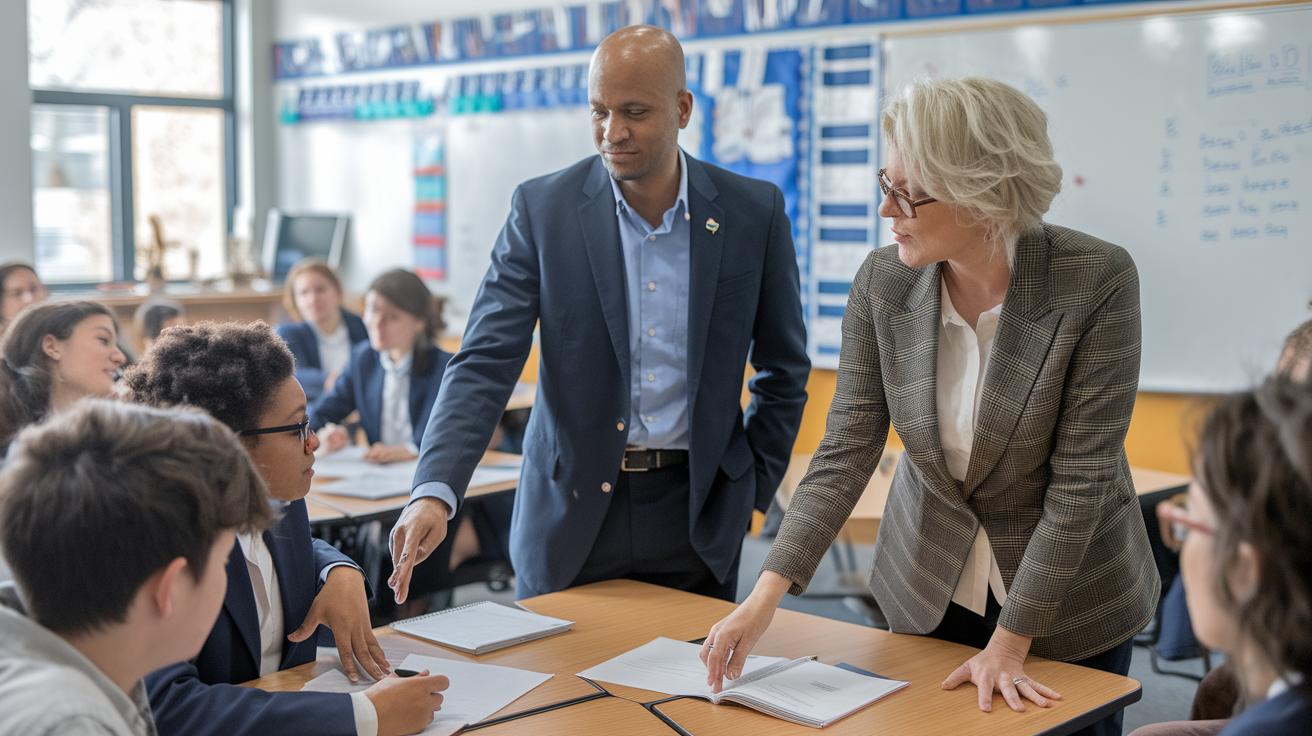
High school teachers are using collaborative problem solving (CPS) to boost critical thinking and decision making. They blend classroom dispute mediation strategies into lessons so students learn to analyze issues, challenge assumptions, and consider many solutions. Many educators now follow adaptive resolution frameworks, giving every student a chance to lead parts of the discussion. For instance, a teacher might say, "Every idea counts when solving a problem," which motivates students to join in and understand mediation techniques better.
Educators also use teacher-led mediation methods to guide structured student dialogues. These techniques help students improve communication, teamwork, and emotional skills while managing conflicts. When mediation strategies are applied, students get a real-life setting to learn how to express concerns respectfully and suggest solutions. The adaptive resolution modules back these efforts by including scenarios that feel real to young learners.
Using CPS with adaptive resolution not only deepens subject comprehension but also sparks a sense of inquiry and responsibility. Mediation methods empower students to take charge of their learning, build resilience, and negotiate disagreements constructively. Teacher-led mediation offers a clear, repeatable model that shows the practical benefits of working together to solve problems in education.
Collaborative Problem Solving in Family and Child Behavior Contexts

Families are increasingly using collaborative problem solving to address the real issues behind challenging behavior in kids and teens. This proven approach focuses on empathy and straightforward talk between parents and children. By working together, families create a setting where every opinion is valued, letting them clearly identify problems and set goals.
This method involves a series of simple steps to guide conversations. Parents speak calmly and clearly while inviting children to explain their views. Everyone listens carefully to ensure all voices are heard. The process typically involves defining behavior challenges, brainstorming solutions together, and agreeing on follow-up actions.
Everyday examples show that these negotiation methods can ease daily conflicts, from sorting out homework routines to resolving bedtime struggles. Family guides offer templates that parents can customize to fit their unique needs. By adopting these steps, families build trust, enhance communication, and create a more supportive home environment.
Tools, Resources, and Training for Collaborative Problem Solving

Digital and curriculum resources are key to building collaborative problem solving skills. Platforms like THINKING PRO offer ready-made curriculum units for English, Social Studies, Multilingual Learners, and College/GED. Their interactive videos, clear competency frameworks, and built-in modules act as online mediation training tools that boost team dialogue and spark creative solutions. Many educators use these tools with simple planning guides to streamline mediation sessions. Interactive intervention toolkits add flexible content with step-by-step instructions, helping teachers and trainers in both schools and workplaces master shared problem solving.
Businesses also profit from digital tools that integrate with platforms like Slack. These online mediation resources support ticketing for IT, HR requests, engineering fixes, customer inquiries, and team approvals. The integrated intervention toolkits and planning guides help teams respond faster. The table below outlines some resources available in educational and business environments:
| Tool | Environment | Key Features |
|---|---|---|
| THINKING PRO | Educational | Curriculum units, interactive videos, clear framework |
| Slack Integration | Business | Ticketing, HR requests, team approvals |
| Mediation Guide | Both | Step-by-step planning, flexible intervention methods |
Online mediation training tools make collaborative problem solving faster and more efficient. With built-in intervention toolkits and planning guides, educators and business leaders get extra support to use proactive frameworks and build stronger teams.
Final Words
In the action, our blog post mapped out how collaborative problem solving drives team success across various settings. It examined shared responsibility from teams to classrooms and even family dynamics. We broke down key principles like open communication and structured frameworks that support joint solution development. The post also covered practical techniques and useful resources for effective conflict management. This approach promotes smart, adaptive strategies in critical situations, paving the way for positive change and stronger outcomes.
FAQ
What is collaborative problem solving?
The collaborative problem solving approach is a team-based process where members jointly identify, analyze, and resolve issues by sharing responsibility and openly discussing ideas.
What are the six steps of the collaborative problem solving method?
The six-step process guides teams from defining the issue and understanding concerns to brainstorming, planning strategies, implementing solutions, and reviewing outcomes.
What does collaborative problem solving look like?
Collaborative problem solving appears as structured meetings where each team member offers ideas, listens actively, and contributes to developing a solution that everyone supports.
What are examples of collaborative problems?
Examples include workplace conflicts needing joint resolution, classroom disputes facilitated by a mediator, and family challenges addressed through shared decision-making.
What is the Collaborative Problem Solving book?
The Collaborative Problem Solving book provides practical methods, case studies, and guidance on using shared decision-making and teamwork to tackle complex challenges.
How can I access a Collaborative problem solving PDF?
A Collaborative problem solving PDF is available as a digital resource outlining strategies and step-by-step instructions to help teams apply shared problem-solving approaches.
What is a Collaborative Problem Solving worksheet?
A Collaborative Problem Solving worksheet is a tool that guides teams to document issues, assign roles, and track progress while working together to resolve challenges.
What does Collaborative problem solving CPS mean?
Collaborative problem solving, also known as CPS, refers to an approach that emphasizes teamwork and shared responsibility to understand problems and create joint solutions.
What is the Collaborative Problem Solving Plan ABC?
The Collaborative Problem Solving Plan ABC is a framework that details specific steps for teams to collaboratively define issues and implement effective action plans.
Who is Ross Greene in collaborative problem solving?
Ross Greene is an advocate and developer of collaborative problem solving models, recognized for his evidence-based methods that promote empathy and shared responsibility.
What is Collaborative Problem Solving training?
Collaborative Problem Solving training offers practical instruction and tools to build communication skills, foster psychological safety, and enhance teamwork in resolving shared challenges.