


Could one investment change the way we travel every day? In growing smart cities, government funds, venture money, and private capital all spark rapid transit upgrades. In one mid-sized city, a transit project received over $150 million, quickly transforming local travel. This article explores how public funds, private investments, and cooperation work together to enhance urban mobility. It explains the key financial forces behind these changes and shows how they pave the way for a faster, greener commute for everyone.
Understanding the financial foundations of next-generation urban mobility
Investment capital, budget allocations, and private equity are the main drivers behind new urban transit. Investment capital is money from sources like venture funds or municipal bonds that jump-start transit projects. Budget allocations come from city or state planning and set aside funds to upgrade transit systems. Private equity is money from private investors looking to benefit from emerging technologies. For example, one mid-sized city's transit project once attracted over $150 million in private equity, changing local commuting options overnight.
Cities use three key funding types to modernize their transit systems: public funding, private investment, and collaborative models. Public funding comes from government grants, tax revenues, and dedicated infrastructure budgets that build and maintain basic services. Private investment, which includes venture capital and institutional financing, drives new technological advances. Collaborative models form when government agencies and private investors join forces to share risks and rewards. As one example put it, "When public agencies and private firms collaborate, they combine financial strength and local know-how, like two skilled chefs creating an exceptional fusion dish."
These funding types work together to power advanced transit solutions. Public money builds the steady foundation for transit networks, while private investment speeds up new technology and service expansion. Collaborative models pool resources and expertise to bridge gaps and share risks. This approach helps cities keep pace with rapid urban growth while continually improving the commuter experience. For instance, a city might use government funds to secure permits and then partner with a private firm to install sensor-based management, resulting in a more agile and sustainable transit system.
Funding mechanisms and investment flows in smart city transport systems

Governments, private investors, development banks, and micro-investment platforms are fueling smart transit projects. Cities use tax revenues and earmarked spending to improve transport networks. Development bank loans offer long-term, lower-risk funding for major projects. Private equity provides flexible capital for digital mobility initiatives. Even small investments through micro-investment platforms let everyday people contribute to local transit improvements. Together, these funding sources help bridge financial gaps in sensor-based travel and connected communities.
Regional markets are becoming more interconnected. International venture capital and sovereign wealth funds further enhance the funding landscape. Public spending, private investment, and targeted loans drive innovative transit solutions. Cities and investors increasingly see reliable returns in integrated digital transitions. This blend of traditional and modern finance supports scalable, tech-driven urban mobility.
| Source Type | Investment Range (USD billions) | Example City |
|---|---|---|
| Public Budgets | 50 – 200 | New York |
| Private Equity | 10 – 50 | San Francisco |
| Development Bank Loans | 5 – 30 | London |
| Micro-investment Platforms | 0.1 – 1 | Tokyo |
The table shows that public budgets provide the largest share of investments, yet private and alternative sources help fill critical gaps. Private equity offers agility, though it is typically more selective and lower in scale. Development bank loans back long-term projects with steady, risk-averse funding. Meanwhile, micro-investment platforms, though smaller, reflect growing grassroots support for smart transit. These trends highlight both challenges and opportunities in aligning funding with the fast-changing needs of urban infrastructure.
Public-private partnerships and policy incentives shaping smart city mobility economics
Public-private partnerships unite government agencies and private companies to share risks and resources while speeding up transit innovation. They use fiscal tools like tax benefits and low-interest loans to promote eco-friendly travel and automated shuttle programs. Policymakers offer these incentives to lower project costs and encourage private investment in modern urban systems. For example, when a city teams up with a tech firm to launch a new sensor-based transit network, both sides share risks and combine their expertise, reducing overall expenses.
Collaborative infrastructure models
Concession contracts let private companies run services under fixed rules while meeting public objectives. Build-operate-transfer programs allow a private firm to construct and manage a transit asset for a set period before handing it back to the government. Joint ventures share both investment costs and operational responsibilities equally between the public and private sectors. For instance, one city used a concession model to deliver a project more efficiently, cutting initial costs and speeding up infrastructure deployment.
Policy-driven fiscal incentives
Tax credits and direct subsidies reduce the upfront expenses of transit projects by lowering taxable income and covering early costs. Low-interest loans and regulatory credits help keep borrowing costs under control and smooth the process of project approval. Paired with supportive measures from central banks and treasuries (see expansionary monetary policy examples at https://smartfinancialtrends.com?p=584), these incentives make cutting-edge urban transit solutions more realistic.
Cities that combine joint infrastructure models with targeted fiscal incentives see better control over costs and reduced risk. These practices set strong examples for advancing urban mobility.
Economic evaluations: cost-benefit analysis and performance metrics in smart city mobility

Urban planners use familiar tools to assess smart transit systems. Methods like return on investment (ROI), net present value (NPV) – which converts future cash flows into today’s dollars – and internal rate of return (IRR) help show whether a project meets financial goals. These models, backed by academic studies and industry reports, offer a clear picture of whether a tech-driven mobility plan can deliver both money-saving and social benefits.
- Return on investment percentage
- Net present value calculation
- Ridership growth rate
- Operational cost savings
- Emission reduction metrics
Each metric plays a key role in funding decisions. A high ROI might mean that a project can reinvest profits to grow services. A positive NPV shows long-term value. More riders boost revenue and validate public spending. Cost savings ease pressure on city budgets, and reducing emissions meets sustainability targets. Together, these measures let decision-makers compare transit projects in a balanced way that supports both careful budgeting and innovative urban mobility.
Case studies showcasing economic drivers in leading smart cities
These case studies highlight how smart investments, technology, and public-private partnerships are reshaping urban transit. They show how cities use significant funds and strong collaborations to build efficient, resilient transport systems.
Songdo, South Korea case study
Songdo has redefined transit with a $1.6 billion green mobility fund. The city invested in integrated bus rapid transit systems and sensor networks that share real-time data across transport modes. Local officials report that these advanced sensors helped lower energy use and improve service reliability, setting a high standard for sustainable urban mobility.
Barcelona, Spain case study
Barcelona invested €225 million in smart traffic management and a public travel app to streamline commuter journeys. The city uses digital tools for dynamic routing and adaptive traffic systems that adjust to road conditions. The app provides real-time updates on traffic and transit options, helping reduce congestion and boost safety on busy streets.
Singapore autonomous shuttle program
Singapore launched a pilot for autonomous shuttle services with support from both the government and private partners. This project uses advanced sensors and data analytics, delivering strong returns on investment. Its solid ridership shows the market is ready for tech-driven transit solutions. For more on funding and performance, visit autonomous ride hailing services (https://sharingeconom.com?p=446).
Together, Songdo, Barcelona, and Singapore demonstrate different ways to upgrade urban mobility through large-scale funding, innovative technology, and effective collaboration.
Financial levers for sustainable, technology-driven smart city mobility networks
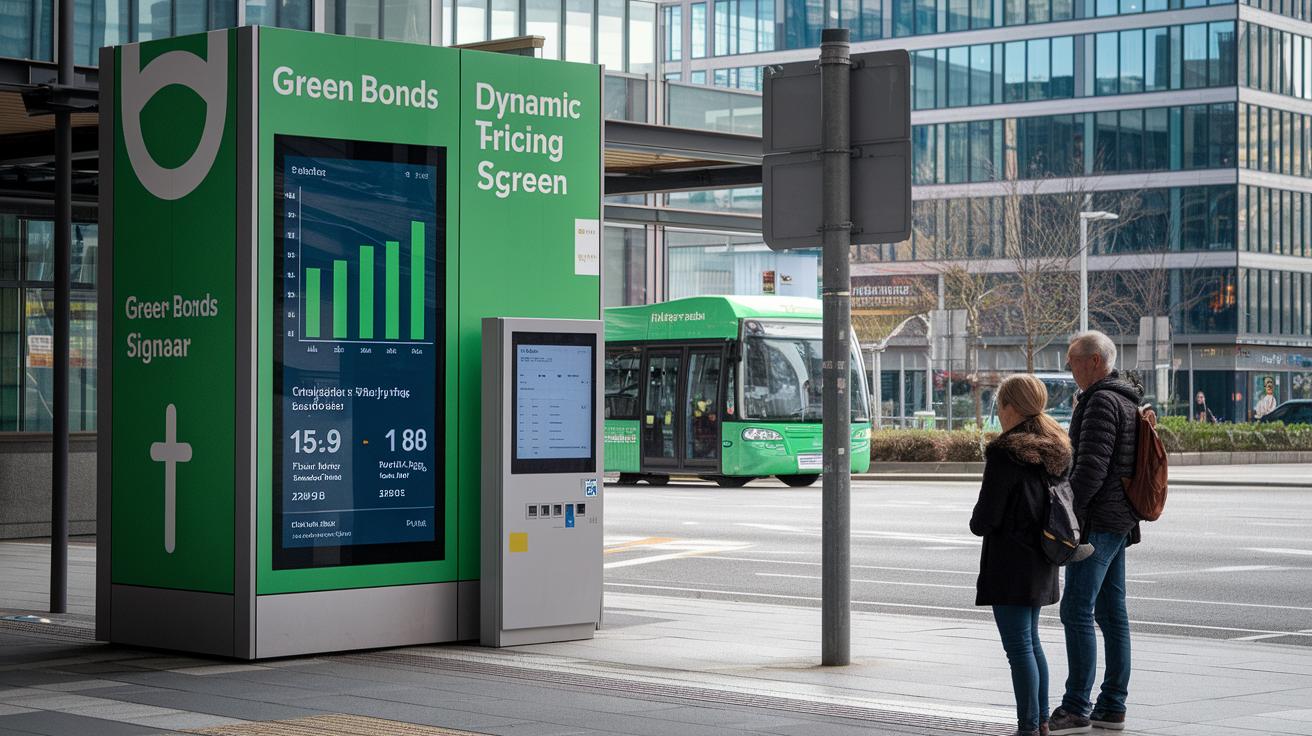
Green bonds, congestion pricing, and dynamic tariff models provide fresh ways to fund eco-friendly transit. Green bonds let cities borrow money for projects that lower emissions and improve air quality. Congestion pricing raises fees during busy times to ease traffic and reduce delays. Dynamic tariff models change prices based on real-time demand. These tools drive investments in sustainable transit, boosting city efficiency while paying for future projects.
Data platforms, subscription services, and revenue-sharing deals further strengthen a smart city's financial base. Data from platforms like platform analytics helps track ridership trends and performance. Subscription services deliver steady cash flow by offering fixed pricing for commuters. Revenue-sharing agreements between public and private groups balance risk and reward. Together, these modern tools create a circular urban economy that encourages continuous innovation and keeps transit systems efficient.
Final Words
In the action, we examined the economic factors powering next-generation urban mobility. We broke down funding mechanisms, public-private partnerships, rigorous evaluations, and real-world case studies that illustrate strategic funding flows, innovative policy incentives, and performance metrics.
Our recap underlines how each element works together to drive advanced transit solutions. The analysis provides clear insights into the economic drivers of urban mobility in smart cities. This solid foundation inspires smart decisions and confidently sets the stage for a future of sustainable, technology-driven transport systems.
FAQ
What are the primary economic drivers of next-generation urban mobility?
The primary economic drivers include investment capital, designated budget allocations, and private equity. They lay the groundwork for advanced transit solutions and support integrated sensor and technology upgrades.
How do funding mechanisms shape smart city transport systems?
The funding mechanisms mix public budgets, private equity, and bank loans with micro-investment platforms. They direct capital into infrastructure upgrades and technology developments that modernize connected transit networks.
What impact do public-private partnerships and policy incentives have on smart city mobility?
The public-private partnerships and policy incentives combine joint venture models and fiscal benefits like tax credits and subsidies. They help reduce risks and costs while paving the way for innovative transit projects.
How is economic performance evaluated in smart city transit projects?
Economic performance is evaluated using metrics such as return on investment, net present value, internal rate of return, ridership growth, operational savings, and emission reductions. These metrics guide funding and project decisions.
What insights do case studies provide on economic drivers for smart city mobility?
The case studies from Songdo, Barcelona, and Singapore show varying scales of funding and discernible innovations. They underline effective capital utilization, collaboration success, and measurable public transit performance improvements.
What advanced financial levers support sustainable, technology-driven smart city mobility?
Advanced financial levers include green bonds, congestion pricing, and dynamic tariff models alongside subscription services and data monetization. These models help optimize revenue streams for sustainable urban transport networks.